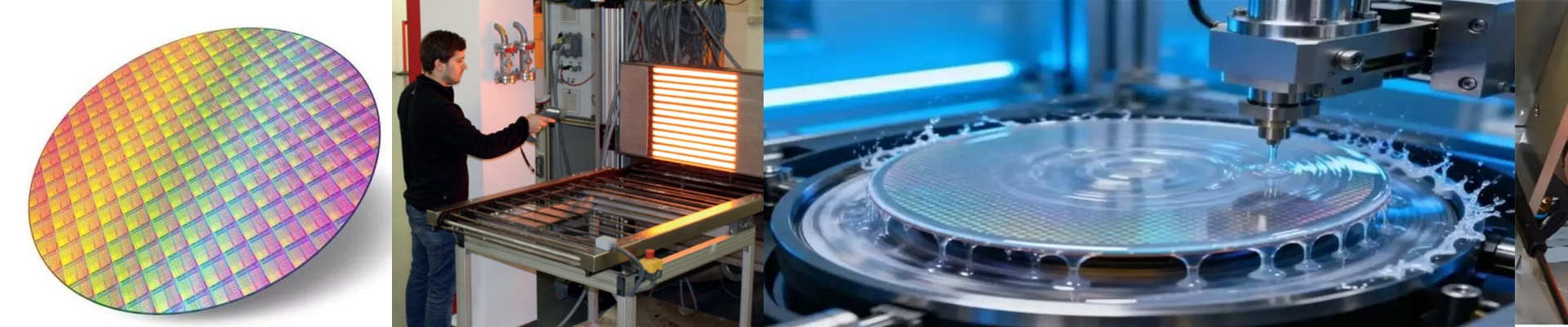
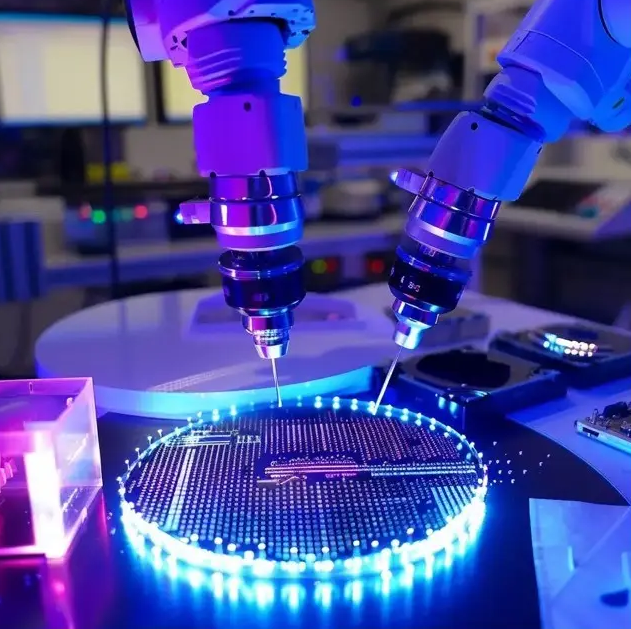
Watch a wafer come off the final rinse, and you know the clock’s ticking. If the heat hits late or isn’t even, you’re going to see water marks, photoresist skinning, and yield slip—fast. We built our wafer drying infrared heaters to stop that cascade before it starts. What matters under the hood We run short-wave infrared emitters in a compact quartz assembly. It’s direct energy transfer with low thermal mass, so you get fast response and tight control. On-product, under production airflow, we hold wafer-level temperature uniformity at ±0.1°C across the drying zone. Control is closed-loop off a calibrated sensor, not the chamber wall. That’s how repeatability stays consistent lot after lot. The heater package is cleanroom-compatible, rated Class 1–100, with surfaces chosen to keep particle generation and outgassing low. Output stays stable over 5,000+ hours, with under 5% intensity drift in steady-state duty. Why this works in lithography and photoresist The thermal budget in lithography and photoresist processing is tight. Soft bake and hard bake profiles have to land in narrow windows to keep CD, profile, and defect density where they need to be. Our infrared heater dries wafers quickly without overshoot, so photoresist integrity stays intact and line-width control stays consistent. You get the speed without trading off uniformity, and energy use drops because the heat goes exactly where it’s needed. The payoff shows up in stable defect counts, predictable bake performance, and fewer rework loops. A few shop-floor details Installation needs matched mounting tolerances and airflow routing verified. Hitting that ±0.1°C uniformity window depends on stable laminar flow and keeping cross-drafts out of the zone. The heater interfaces with standard semiconductor tools, but integration still needs a check on clearance, thermal load, and sensor placement. Long life is there, but you still have to keep the temperature sensor on calibration schedule. That’s what keeps the specified uniformity holding up over time.