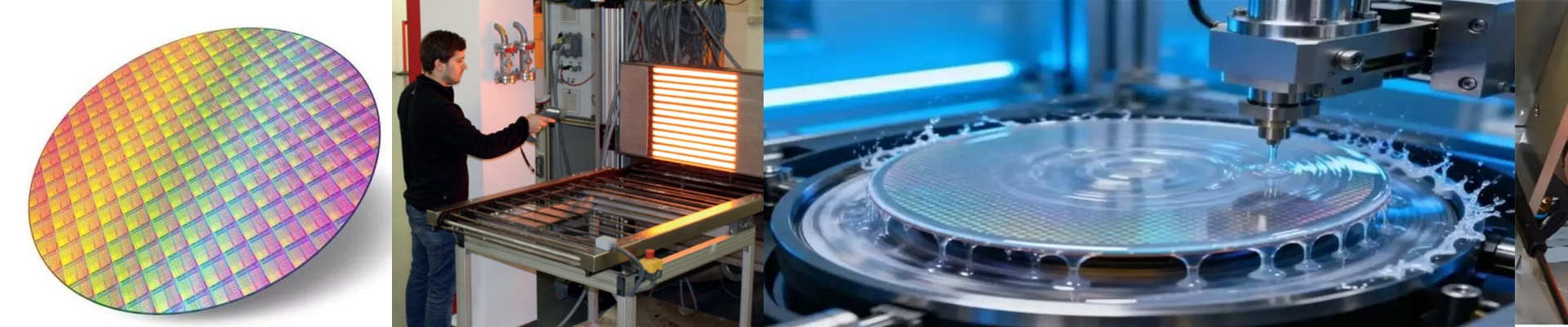
On the lithography floor, you learn fast that a half-degree drift in soft bake will move your CDs. Run the hard bake too hot, and you’re asking for scumming and yield loss. Thermal control isn’t a background knob—it’s a hard constraint on overlay, line-width, and defect budget. Oxford Instruments heater elements are built for that reality, delivering repeatable heat right where the process needs it. What matters under the hood The heater element is engineered for wafer-level thermal uniformity, typically holding ±0.1°C across the chuck during bake and cure steps. It runs clean—compatible with Class 1–100 environments and designed for near-zero particle generation. Output repeatability holds up around the clock, so photoresist profiles stay stable and you don’t get excursion-driven scrap. Temperature ramp control is tight, so the thermal budget lines up with the resist chemistry, not with guesswork. Why this matters in photoresist processing In the bake/cure stack, the oven or hotplate has to hit the same setpoint, in the same spot, every single time. That’s how you get consistent soft bake, consistent hard bake, and consistent adhesion—so CD control and defect density stay in spec. The element’s cleanroom-compatible construction keeps particle counts low, protecting the wafer surface during transfer and bake. Reliability translates straight into uptime: fewer unplanned stops, fewer requalifications, and fewer mask set reworks. What you need to do on the tool The element fits standard mounting and thermal interfaces, but the interface surface has to be flat and clean—otherwise uniformity falls apart. Plan for proper thermal anchoring and verify voltage and connector compatibility with the host tool. Treat the element like a precision metrology component: handle it in a controlled environment and schedule periodic calibration so that ±0.1°C performance stays valid across wafer lots.