Why we put our bathroom heaters through hell
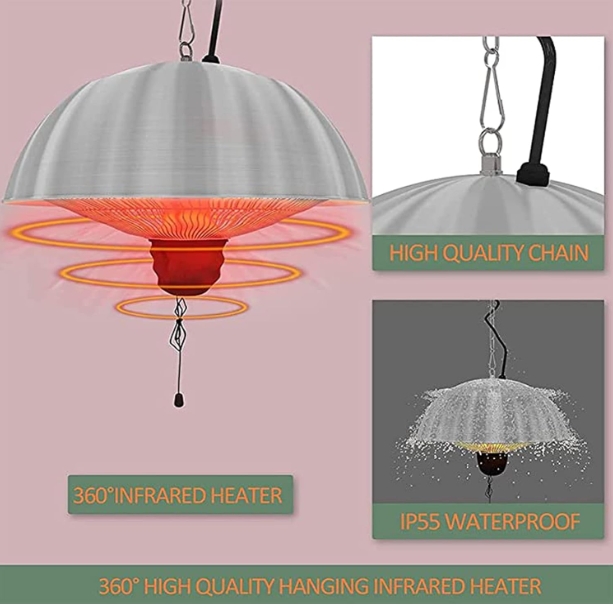
We build our infrared lamps to be splash-proof (IPX4), but honestly? A rating on a spec sheet isn’t enough. Think about a bathroom. It’s a brutal place for electronics. You’ve got thick steam, direct water splashes, and temperature swings that go from freezing to sauna-hot in minutes. If we just did a quick quality check and shipped them out, we’d be guessing. That’s why we use damp-heat aging tests. We basically try to break the heaters in our lab so they don’t break in your home.
The battle against moisture
Water is the natural enemy of anything that plugs into a wall. Steam is sneaky. It finds the tiniest gaps in the housing, creeps inside, and settles on the circuitry. If that happens, you get oxidation. Connections fail. Insulation breaks down. Instead of waiting for a customer to tell us there’s a problem, we throw our units into a humidity chamber. We simulate years of steamy showers in a few days. We push the electronics until they’re saturated just to make sure the safety barriers actually hold up.
The balancing act
Getting that IPX4 rating is a bit of a tug-of-war. To keep water out, we use heavy-duty gaskets and sealed cable entries. But here’s the catch: the tighter we seal the unit to keep the water out, the harder it is for the heat to escape. If we seal it too tight, the internals cook themselves. If we leave it too loose, the steam ruins the circuit board. It’s a delicate balance, and we spend a lot of time tweaking the materials to get it just right.
No one wants a tripped breaker
There’s nothing worse than stepping out of a hot shower only to have your heater trip the circuit breaker. It’s annoying, and it’s a sign that something is wrong. Our aging process makes sure the sealants don’t crack when the unit heats up and expands. We track the electrical resistance for 500 hours of damp-heat exposure. **If the resistance drifts by more than 5%, the design is trash.**We send it back to the drawing board. It sounds like a lot of extra work, but it’s the only way to be sure the wattage stays stable and the unit stays safe in a wet zone.